Solutions · AI Use Cases

Run DMS, ADAS, and fleet safety on one runtime.

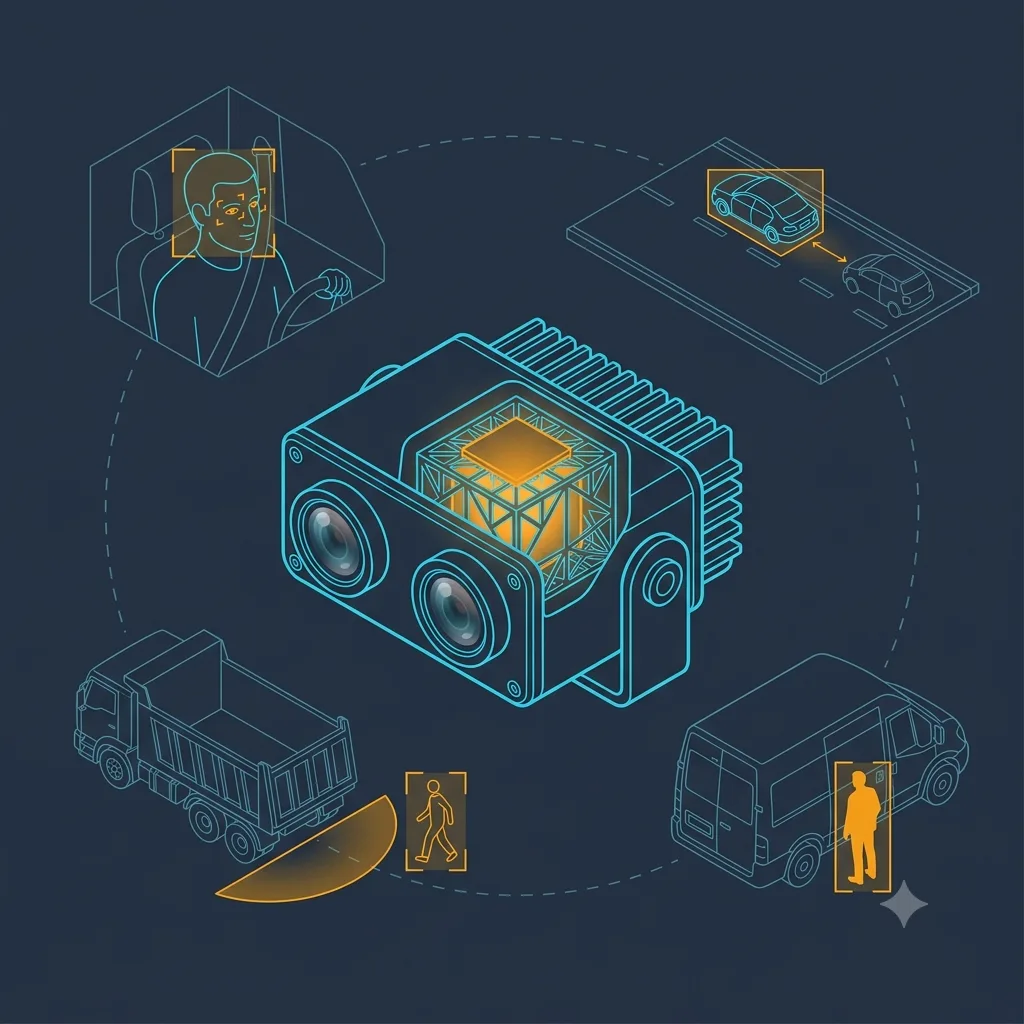
On-device vision jobs — driver monitoring, drive assistance, worksite safety, asset security — fused with live vehicle telemetry. Camera and NPU share memory, no CPU pixel copy. Bring an ONNX or TFLite model; up to ~100 TOPS on the AI-class tier.

A central in-vehicle AI camera box with an amber NPU core, ringed by four cyan vignettes — driver monitoring, forward-road assistance, a reversing worksite vehicle, and a parked-van cargo door

Catalog of AI use cases

One runtime. Every vision job your fleet runs.

Each job is a model on the device fused with synchronised OBD, GNSS, and CAN. Video is analysed on the box — only events and the clips you choose ever leave the vehicle. Bring your own model or have one trained from your footage.

Jobs run on detection and classification today. Jobs marked on study use pose, distance estimation, or text reading and are in development — validated per fleet before they ship.

Driver — facing in

Driver monitoring (DMS)

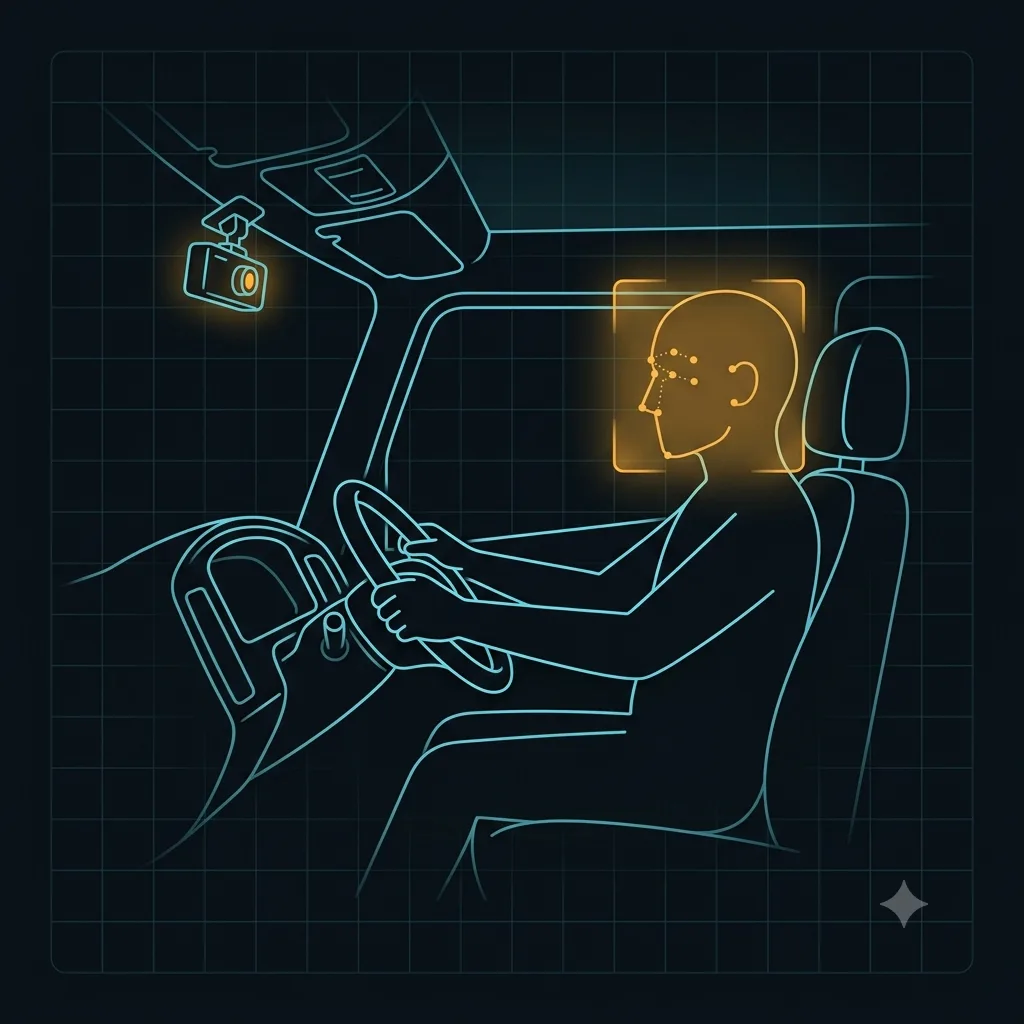
Cabin-facing vision watches the driver, not the road. Every detection is gated by trip, speed, or ignition state, so alerts fire in context — and the in-cab feed is analysed on the box, never uploaded.

Cab interior from a dash camera — an amber detection box on the driver’s head, cabin and steering wheel in cyan line-work

Drowsiness & fatigue

Eye-closure and head-nod patterns are scored on the in-cab optic and weighted by how long the driver has been on the road, so a long night shift raises sensitivity. Inference runs on the box — the cabin feed never leaves the vehicle.
fuses trip stream · time-of-day trip-gated

Distraction & eyes-off-road

Head-down, eyes-off-road posture is classified continuously, but the alert is held until GNSS speed crosses a moving threshold — a parked glance at the phone does not fire it. On-device only.

fuses GNSS speed speed-gated

Handheld phone use

Hand-to-ear and handheld-device gestures are classified while the vehicle is in motion, separating a quick glance from sustained handheld use. No frames are uploaded to make the call.

fuses GNSS speed speed-gated

Seatbelt & in-cab policy

Seatbelt-on state and in-cab policy breaches are read from the image and correlated with ignition and motion, so the check applies only once the vehicle is actually in service.

fuses ignition · motion ignition-aware

Road — facing out

Drive assistance (ADAS)

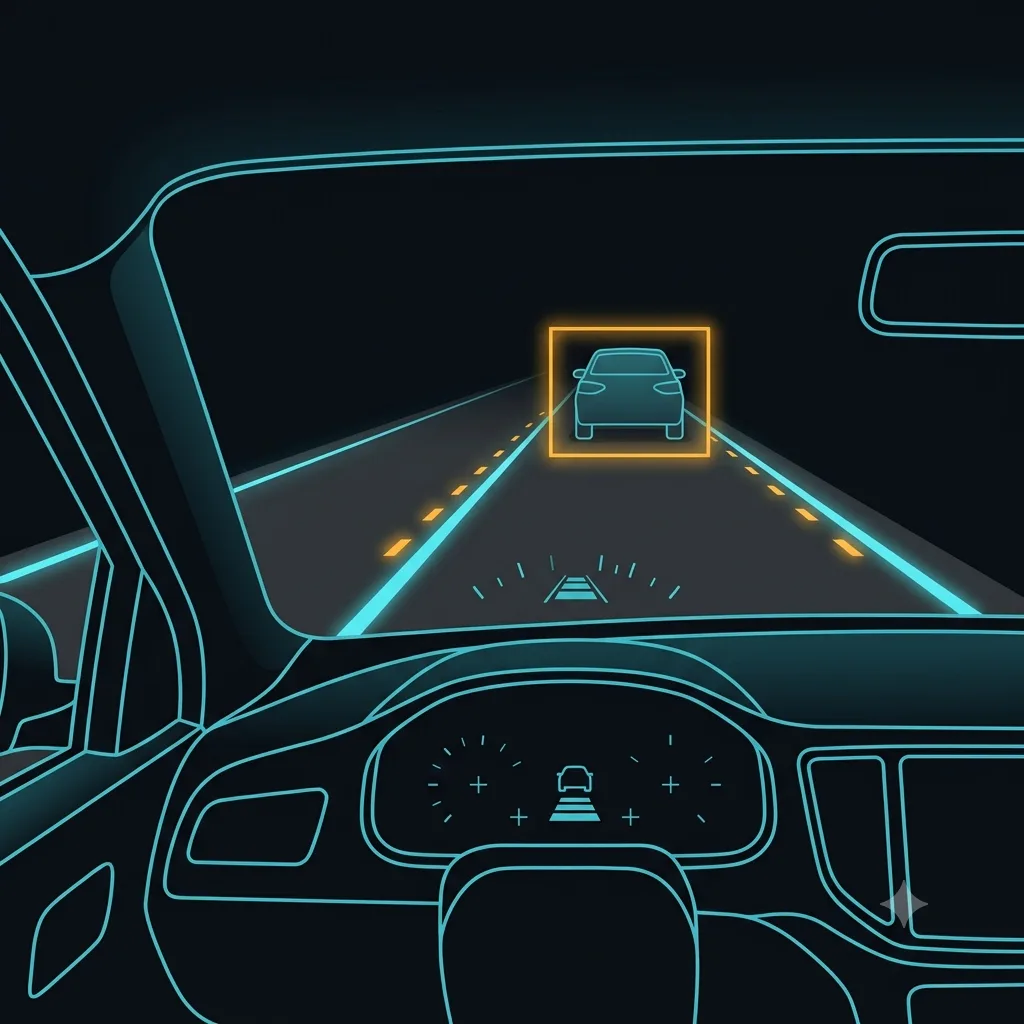
Road-facing vision watches the path ahead. Detections fuse with own speed, steering, and turn-signal CAN, so a warning reflects what the vehicle is actually doing — not a raw pixel guess.

Forward road view through a windshield — an amber bounding box on the lead vehicle, cyan lane markers and dashboard

Forward-collision warning

The lead vehicle and its closing gap are tracked on the forward optic and fused with own speed, so the imminent-impact warning scales with how fast you are actually approaching.

fuses GNSS speed speed-fused

Lane-departure

Lane drift is detected on the road optic and suppressed the moment turn-signal CAN state shows the manoeuvre is intentional — signalled lane changes do not nuisance-trip.

fuses turn-signal CAN CAN-gated

Vulnerable road users

Pedestrians and cyclists in the forward path are detected and ranked by speed and steering angle, so the closest in-path risk is surfaced first.

fuses GNSS speed · steering angle path-ranked

Headway / tailgating score

on study

Following distance is estimated from the forward image and graded against speed for a time-gap score. Distance estimation is in development and validated per fleet before it ships.

fuses GNSS speed estimation

Speed-limit sign read

on study

Speed-limit signs are read by on-device OCR and compared with measured speed to raise an over-speed event. Sign reading is in development and validated per fleet before it ships.

fuses GNSS speed sign OCR

Worksite — around & behind

Worksite & delivery safety

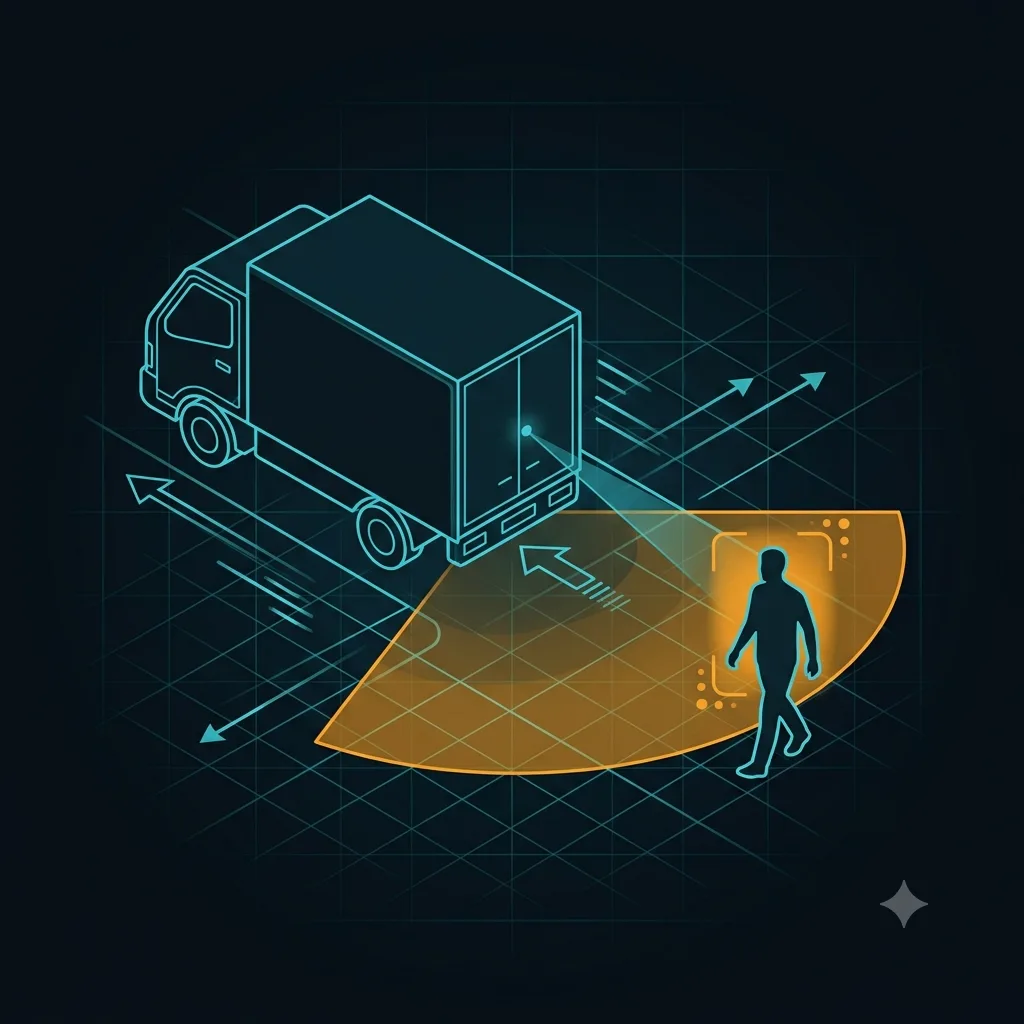
Around-and-behind vision covers the low-speed danger zone — reversing, loading, and manoeuvring near people. The safety alarm fires locally on the box, with no cloud in the loop.

Box truck reversing with an amber danger-zone arc on the ground and a detected pedestrian entering it

Pedestrian danger zone

A person entering a defined danger zone around a machine or reversing vehicle is detected and fires a local alarm at the box — no cloud round-trip in the safety loop.

fuses reverse gear reverse-gated

Reversing & blind-spot watch

People and obstacles alongside or behind are detected during low-speed manoeuvres, covering the blind spots a mirror misses.

fuses reverse gear reverse-gated

Tailgate fall risk

on study

Pose estimation flags a person at the edge of an open liftgate during loading. Pose work is in development and validated per fleet before it ships.

fuses door state pose

Loading-zone clear check

on study

Before the vehicle is cleared to move off, the rear area is confirmed clear of people. Gear-gated and in development, validated per fleet before it ships.

fuses gear gear-gated

Asset — cabin & cargo

Asset & cargo security

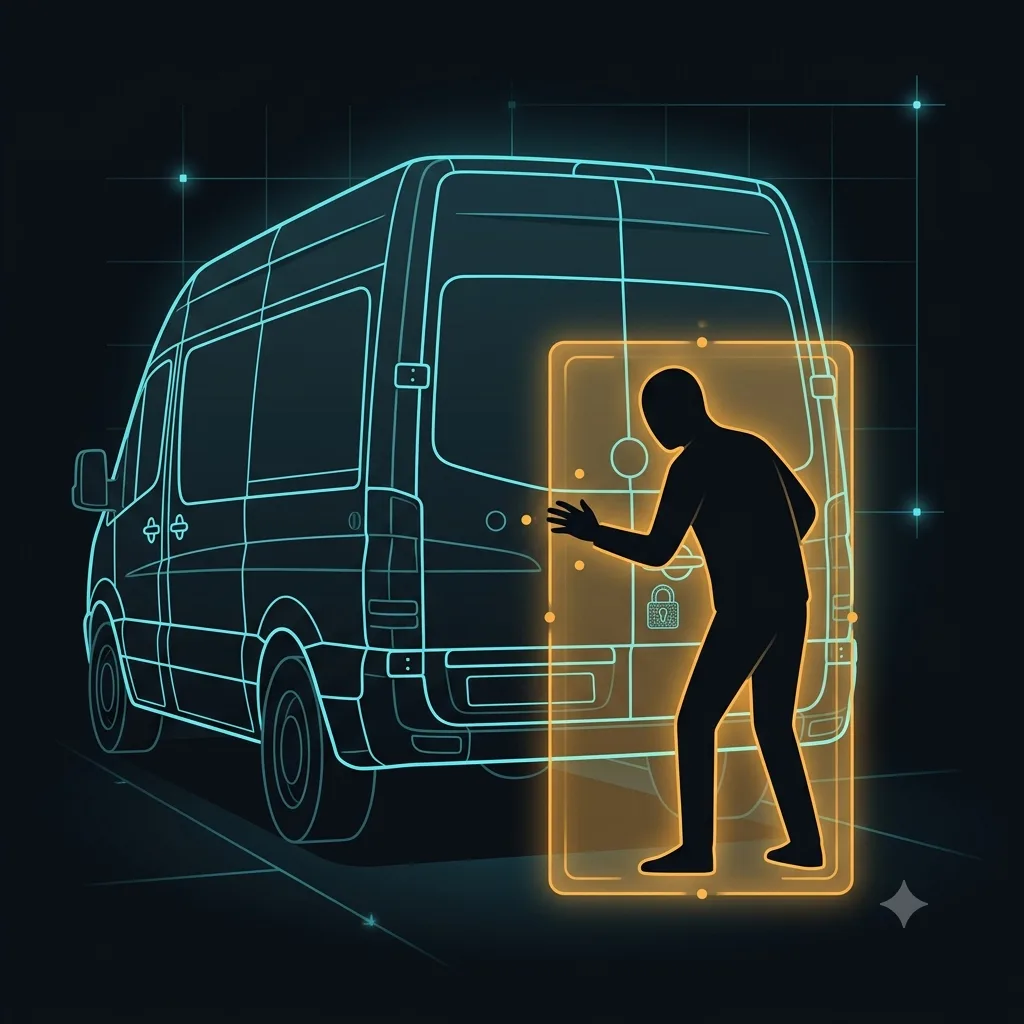
Cabin-and-cargo vision watches the asset when the vehicle is parked or moving unattended. Detections are stamped with GNSS and gated by lock, ignition, and motion state.

Rear of a parked van — an amber-framed silhouette detected at the open cargo door

Left-behind occupant or object

A passenger, child, or object left in the cabin is detected after ignition-off and door events, so the alert fires once the vehicle is parked up and emptying.

fuses ignition · door ignition-off

Cargo-area intrusion

A person entering the cargo area while the vehicle is parked and locked is detected and stamped with GNSS location for the event record.

fuses GNSS · lock state GNSS-stamped

Door-open while moving

An open door read from the image is cross-checked against motion telemetry, so the event fires only when a door is open while the vehicle is actually moving.

fuses motion · door state motion-fused

On-demand & bring-your-own model

Bring a model. Run it on the box.

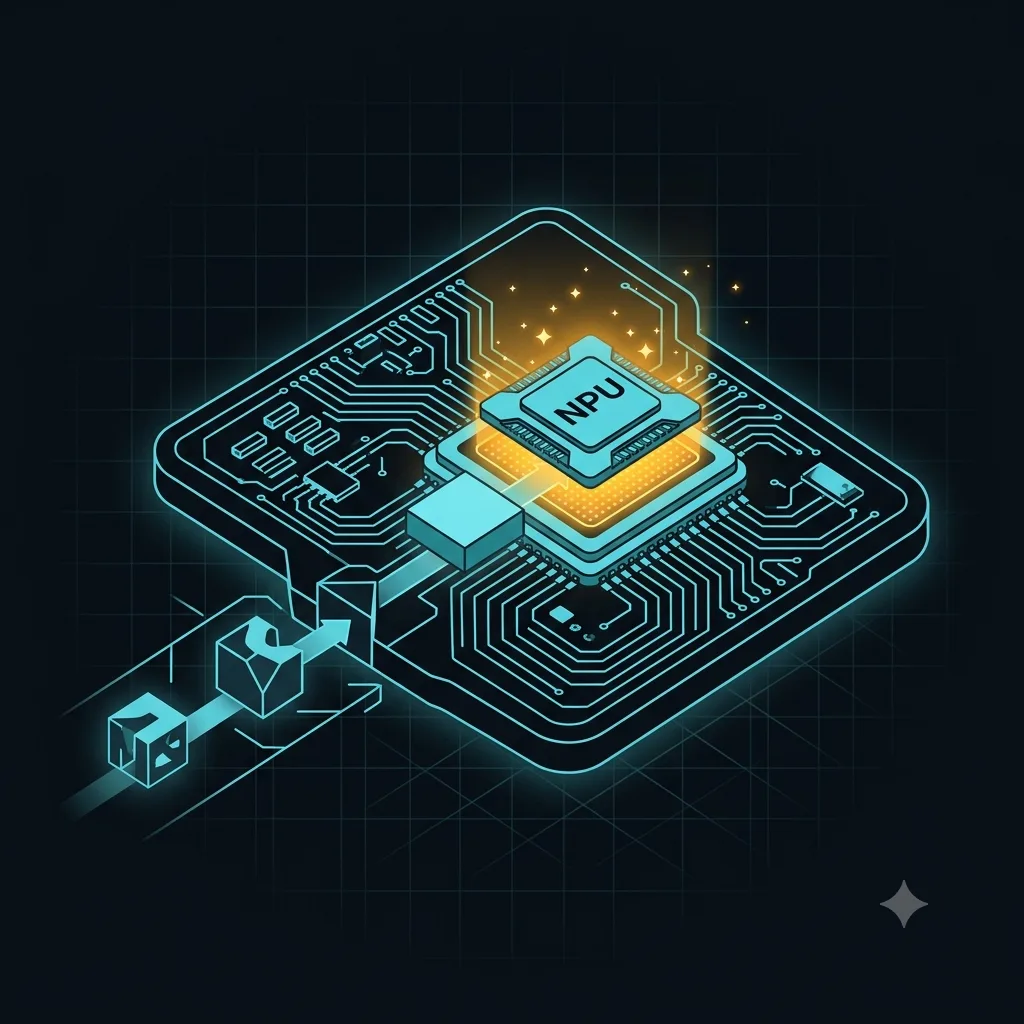
The runtime is model-agnostic. Ship an ONNX or TensorFlow model and it is converted to the on-device format for you, or have one trained from your labelled footage. Models load when a pipeline starts and release when it stops, so one device can carry several use cases from the catalog above.

Isometric on-device NPU on a circuit board with an amber inference glow, model blocks feeding in
2 model formats in ONNX + TensorFlow → on-device .tflite
≤ 50 MB model size ≤ 5 MB recommended for lowest latency
on-device where inference runs raw video never has to leave the box
AI-class silicon tier NPU required — no CPU inference fallback
formats ONNX · TFLite

Bring an ONNX or TensorFlow model; it is converted to the on-device .tflite format for you. Up to ~50 MB; under 5 MB keeps latency lowest.

inference on-device NPU

Frames are analysed on the NPU before a byte leaves the box. Raw video stays local — only events and the clips you choose to upload ever leave the vehicle.

lifecycle load · unload

Models load when a pipeline starts and release when it stops. Run a single model or cascade several across the NPU on the same frames.

fusion detection + telemetry

Every detection is fused with synchronised OBD, GNSS, and CAN — so a use case can be gated by speed, gear, or door state. The full pipeline lives at AI Funnel.

FAQ

Frequently asked questions

  • Can I bring my own model?

    Yes. Ship an ONNX or TensorFlow model and it is converted to the on-device .tflite format for you, up to ~50 MB. Under 5 MB keeps latency lowest. Or have one trained from your labelled footage.

  • Where does inference run?

    On the device NPU, on AI-class silicon. Raw video is analysed on the box — only events and the clips you choose to upload ever leave the vehicle. There is no CPU inference fallback.

  • Can one device run several use cases?

    Yes. Models load when a pipeline starts and release when it stops, so one device can carry several jobs from the catalog — run a single model or cascade several across the NPU on the same frames.

  • How are models retrained and updated?

    Cloud retraining, quantisation, and OTA model delivery are managed by the AI Funnel pipeline. Retrained models land on the device without a full firmware update.

Bring a camera and a use case.

Pick the jobs you need, bring your own model or footage, and we will sketch the on-device pipeline during the call.

Building on MOS4?

One reply from engineering, ~24h. No deck, no NDA.

Talk to engineering