Solutions · Trucks & LCV
Ship a truck or LCV fleet platform.
A connected-vehicle OS for heavy-truck and LCV fleet programmes. Ships J1939, ELD readiness, dual APN, eUICC Consumer + eUICC M2M, and the autonomous multi-stack engine. Engineering writes the fleet application — protocol stacks and OTA infrastructure are already shipped.

How MOS4 fits
Three capabilities for a heavy-duty fleet programme.
J1939, HD-OBD, and FMS from one runtime
All heavy-duty protocols share one unified protocol API. J1939 and HD-OBD (Heavy-Duty On-Board Diagnostics) run concurrently on one device. Diagnostic trouble code (DTC) reading is available for J1939 SPN faults and HD-OBD service 03. Stack definitions are data files — parameter-group or signal changes are data-file edits.
FMCSA-certified Electronic Logging Device (ELD)
FMCSA-certified ELD via the hours-of-service micro service. Tracks all seven FMCSA hours-of-service rule sets. HOS application available June 2026 — white-label via ekkofleet.com.
Rear tachograph integration on C4Max EU
C4Max EU stack ships with rear-face tachograph integration for EU regulatory heavy-duty fleets. C4Max is the primary EU/NA hardware platform. Ekko Drive serves a complementary driver-cabin role.
FMCSA compliance
hours-of-service — all seven HOS rule sets.
The service hours-of-service micro service tracks all seven FMCSA
hours-of-service rule sets, seven malfunction codes, and five diagnostic event codes continuously.
Four FMCSA data-transfer channels: SOAP, email, USB, and Bluetooth. Certification test harness
ships in-repo.
| HOS rule | Limit | Reset |
|---|---|---|
| 11-hour driving | 11 hours driving after 10 consecutive off-duty hours | 10 consecutive off-duty hours |
| 14-hour window | 14-hour on-duty window after coming on-duty | 10 consecutive off-duty hours |
| 30-minute break | Break required after 8 cumulative driving hours | 30-minute off-duty or SB period |
| 60/70-hour limit | 60 hours / 7 days or 70 hours / 8 days on-duty | 34-hour restart |
| 34-hour restart | Restart 60/70-hour limit after 34 consecutive off-duty | 34 consecutive off-duty hours |
| Sleeper-berth split | SB split: 7+3 or 8+2 hours | Combined 10 hours off-duty |
FMCSA-certified ELD via the hours-of-service micro service. HOS
application available June 2026 — ekkofleet.com.
Platform metrics
Key numbers.
Reference architecture
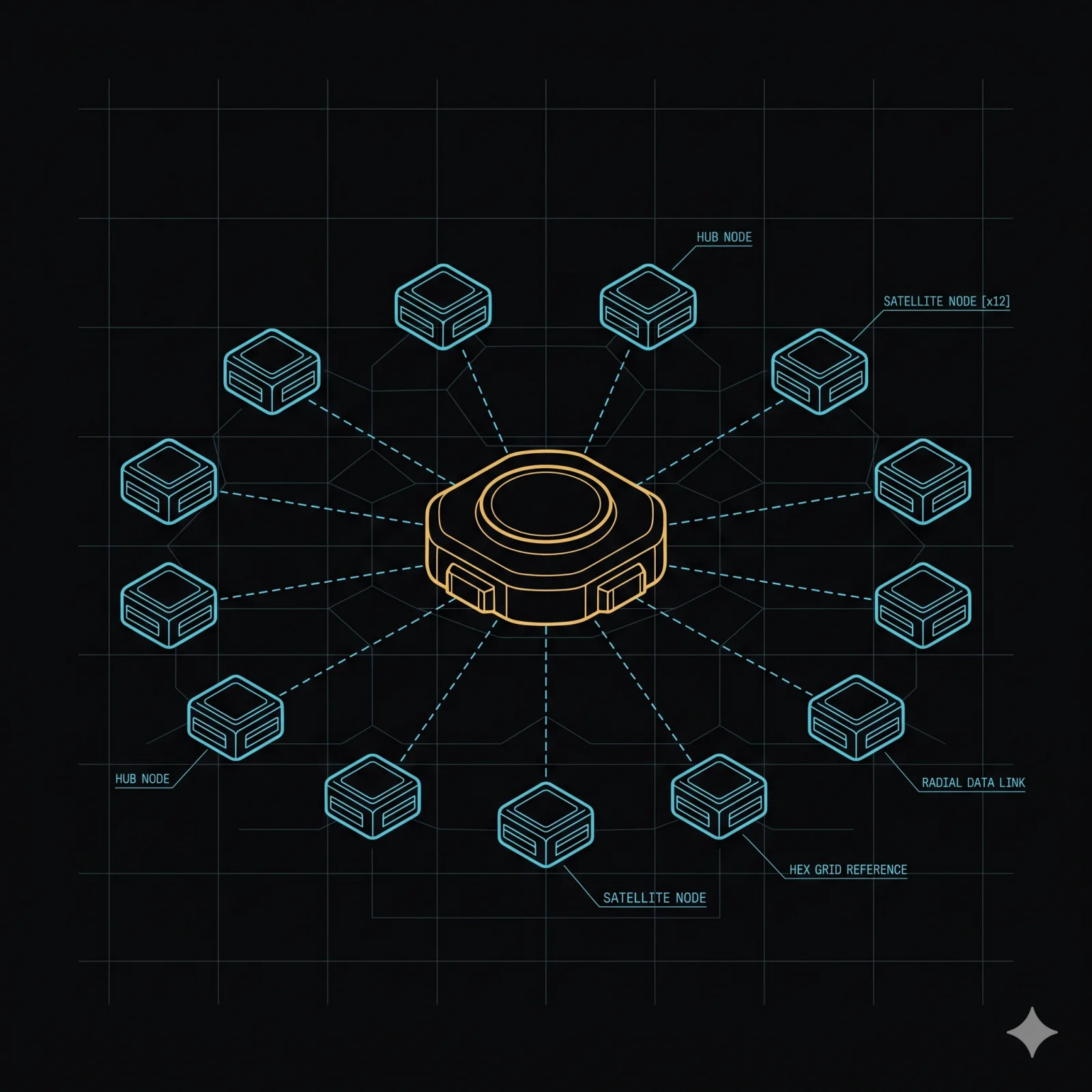
A heavy-duty fleet programme on MOS4.
FAQ
Frequently asked questions
-
Which heavy-duty protocols does MOS4 cover?
J1939, HD-OBD (Heavy-Duty On-Board Diagnostics), J1587/J1708, J1850, CAN-FD, and FMS — all share one unified protocol API. J1939 and HD-OBD run concurrently on one device without separate hardware.
-
Is the ELD FMCSA-certified?
Yes. The hours-of-service micro service is FMCSA-certified as an Electronic Logging Device (ELD). The fleet application is available June 2026 — white-label via ekkofleet.com.
-
Which platforms carry rear tachograph integration?
The C4Max EU hardware platform ships with rear-face tachograph integration. This capability is C4Max-specific.
-
What is the difference between C4Max and Ekko Drive?
C4Max is the primary EU/NA heavy-duty hardware platform. Ekko Drive serves a complementary driver-cabin role. Both are available. C4Max scenario: 153 features confirmed. Ekko Drive: 151 features.
-
How does the HOS duty-status transition work?
Duty-status transitions trigger automatically on observable signals — engine power, vehicle speed, GNSS fix validity. Carrier-specific HOS thresholds change via configuration update, not a firmware release.
-
How does cellular connectivity work on sealed telematics units?
Embedded SIM (eUICC) profile management compliant with GSMA SGP.22 v2.2 (Consumer) and GSMA SGP.02 (M2M) ships with the modem stack. A carrier switch is a remote SIM profile swap — no physical access to the telematics unit required.
-
How does over-the-air update rollback work in a truck fleet?
Dual-slot (A/B) root filesystem with automatic rollback. A failed update reverts without a workshop visit. Signed delta packages reduce the data transferred over cellular.
Bring your fleet programme.
Protocol mix, ELD requirements, EU tachograph scope, and OTA lifecycle constraints. We will sketch the MOS4 fit during the call.